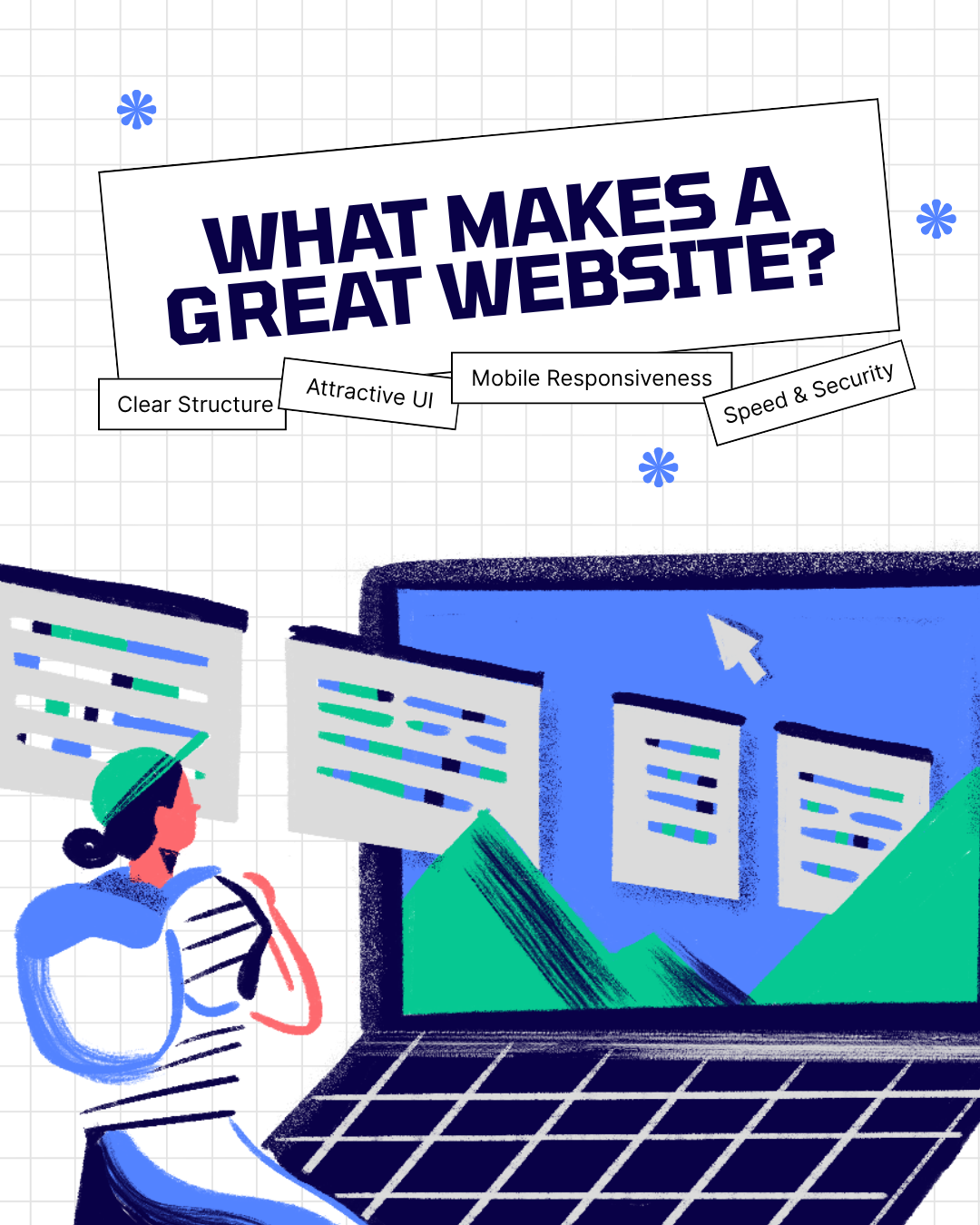
In today’s digital world, a website is more than just an online presence — it’s your brand’s identity, your customer’s first impression, and your most powerful marketing tool. But what exactly makes a website great? Let’s break it down.
1. Clean and Professional Design
A great website has a modern design with a clean layout, balanced colors, readable typography, and intuitive visuals. Visitors should feel comfortable and confident within seconds of landing on your page.
- Use a consistent color theme
- Keep spacing and alignment perfect
- Highlight call-to-action buttons (like “Buy Now” or “Contact Us”)
2. Lightning-Fast Loading Speed
Speed is crucial. Even a 2-second delay can make users leave your site. Optimize your images, use caching, and ensure clean, minimal code for top performance.
3. Mobile Responsiveness
Over 70% of web traffic comes from mobile devices. Your website must adapt perfectly to every screen size — from large monitors to small smartphones.
4. Easy Navigation
Users should find what they need in seconds. A clear menu, organized categories, and a visible search bar can significantly improve the browsing experience.
5. SEO Optimization
Search Engine Optimization (SEO) helps your site appear on Google and attract organic traffic. Use proper headings, meta descriptions, alt text, and keywords naturally within your content.
6. Engaging and Valuable Content
Content is the heart of your website. Write for humans first and search engines second. Educate, entertain, and solve your visitor’s problems through articles, blogs, or videos.
7. Security and Trust
A secure website (HTTPS) builds trust. Always use SSL certificates, secure forms, and update plugins or systems regularly to avoid vulnerabilities.
8. Strong Brand Identity
Everything from your logo to your tone of writing should reflect your brand’s personality. This consistency builds recognition and loyalty.
9. Analytics and Continuous Improvement
Use tools like Google Analytics to track user behavior. Understand what’s working and where users drop off — then improve continuously.